
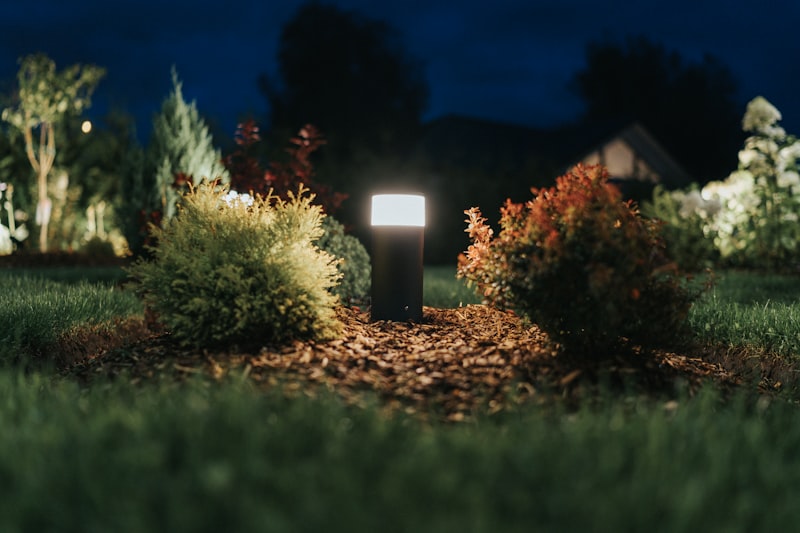
A well-lit garden transforms your outdoor space from something you can only enjoy during daylight into a feature that adds ambience, security, and genuine value to your home every evening. In Sydney's Eastern Suburbs, where outdoor entertaining is a way of life, landscape lighting isn't just decorative — it extends your living space.
Good landscape lighting design follows the same principles as interior lighting: it layers ambient, task, and accent light to create depth, atmosphere, and functionality. The difference is that you're working with nature — trees, stone, water, and architecture — instead of furniture and walls.
The Fundamentals of Landscape Lighting Design
Three Layers of Outdoor Light
Professional landscape lighting uses three layers that work together:
- Ambient lighting: The overall illumination that lets you move through the space safely — path lights, bollards, and soft wash lights on walls
- Task lighting: Focused light where you need to see clearly — BBQ areas, outdoor kitchens, steps, and entrances
- Accent lighting: The dramatic layer — uplighting feature trees, washing light across textured walls, silhouetting sculptural plants, illuminating water features
The key is restraint. Over-lighting a garden looks worse than under-lighting it. You want pools of light and shadow — not a floodlit football field.
Key Lighting Techniques
Uplighting
A ground-mounted light aimed upward at a tree, wall, or architectural feature. This is the most dramatic technique in landscape lighting — it creates shadows and textures that don't exist in daylight. Uplighting works beautifully on:
- Feature trees with interesting trunk structures (palm trees, figs, Japanese maples)
- Textured stone or brick walls — the light rakes across the surface and highlights the texture
- Architectural columns, pergola posts, and facade features
- Tall shrubs or hedges for a soft glow effect
Downlighting (Moonlighting)
Fixtures mounted high in trees or on structures, angled downward to create a natural moonlight effect. Dappled light filtering through branches creates beautiful shadow patterns on the ground below. This is the most natural-looking landscape lighting technique.
Path Lighting
Low-level fixtures that illuminate walkways, garden paths, and driveways. The goal is safe navigation, not spotlighting the path itself. Use fixtures that direct light downward onto the path surface rather than glaring into people's eyes. Spacing of 2–3 metres apart on alternating sides creates a natural rhythm.
Silhouetting
A light placed behind a plant, aimed at a wall or surface beyond it. The plant appears as a dark silhouette against the illuminated background. This is particularly effective with plants that have dramatic shapes — palms, ornamental grasses, frangipani.
Wall Washing
A broad, even light spread across a wall surface. Used on garden walls, fences, and house facades to create a backdrop of light. Works best on flat, uniform surfaces where the even wash creates a clean, contemporary look.
Grazing
Similar to wall washing but with the light placed very close to the surface and aimed parallel to it. This emphasises texture — rough stone, timber, brick, and rendered walls all look dramatic when grazed with light.
Design Ideas for Sydney Gardens
Front Garden and Entrance
Your front garden is the first thing visitors see. Good entrance lighting is both welcoming and practical:
- Path lighting from the street to the front door: Use low bollards or recessed path lights at 2–3 metre intervals
- Step lights: Recessed LED step lights in risers illuminate treads and prevent trips — essential for safety
- Facade lighting: Uplight the front of the house to create a warm, inviting glow. Wall-mounted fixtures flanking the front door are classic and effective
- House number illumination: A small spotlight on your house number is a simple touch that makes a big difference for delivery drivers and visitors
- Feature planting: Uplight one or two feature plants near the entrance for drama — a single well-lit palm or olive tree makes a statement
Entertaining Areas
Sydney living revolves around outdoor entertaining. Your deck, patio, or courtyard needs lighting that works for both casual dinners and weekend parties:
- Overhead string lights: Festoon lights (the large-bulb type) strung above a dining area create instant atmosphere. Use warm white 2700K LEDs. Your electrician can install permanent weatherproof power points and hook points for easy seasonal setup
- Dimmable overhead lighting: For covered patios and pergolas, dimmable LED downlights or pendant lights give you control over the mood
- BBQ and outdoor kitchen task lighting: Bright, focused lighting (4000K) directly over cooking and prep areas. An IP65-rated LED strip under an overhead shelf or rangehood works well
- Recessed deck lights: Low-level LED lights recessed into decking boards or stair risers define the space without glare
- Garden bed perimeter lighting: Soft lighting around the edges of the entertaining area creates a sense of enclosure and intimacy
Pool and Water Features
Water and light are a powerful combination. Pool and water feature lighting adds drama and safety:
- Underwater pool lights: LED pool lights in colour-changing or warm white transform the pool at night. These must comply with AS/NZS 3000 requirements for pools and be installed by a licensed electrician
- Pool surround lighting: Recessed lights in the coping or deck around the pool define the pool edge (essential safety feature) while looking elegant
- Water feature illumination: A submerged light in a fountain or water wall creates a stunning focal point. Even a simple garden tap wall with a light behind the water stream looks beautiful
- Safety consideration: All electrical installations near pools must comply with strict zone requirements under AS/NZS 3000. There are minimum distances for different types of electrical equipment from the pool edge
Garden Beds and Trees
- Select 3–5 key features: Don't light everything. Choose the most interesting trees, plants, or garden elements and let the rest fade into darkness. This creates depth and mystery
- Uplight trees from multiple angles: Two or three small uplights around a large tree create more interesting shadow patterns than a single bright light
- Graze textured surfaces: Garden walls, timber screens, and stone features come alive when grazed with light
- Consider seasonal changes: Deciduous trees look different in summer (leafy canopy) and winter (bare branches). Both can be beautiful when lit, but the effect changes
- Hide the fixtures: The best landscape lighting is where you see the effect but not the source. Bury spike lights in garden beds, conceal fixtures behind rocks or plantings
Driveways and Garages
- Driveway bollards or recessed lights: Define the driveway edges for safe navigation. Solar options exist but hardwired LEDs are far more reliable
- Motion-activated lighting: A motion sensor on the driveway lighting means it activates as you arrive — convenient and energy-efficient
- Garage entrance light: A wall-mounted or soffit-recessed light above the garage ensures you can see to park and unload
Technical Considerations
12V vs 240V Systems
Most modern garden lighting uses 12V or 24V LED systems powered by a transformer:
- 12V/24V (low voltage): Safer around water and in garden beds, more energy-efficient, cables can be buried at shallower depths (300mm vs 600mm for 240V), and fixtures are smaller and more discreet. Ideal for most landscape lighting applications
- 240V (mains voltage): Necessary for high-output floodlights, some post lights, and very long cable runs where voltage drop would be an issue at low voltage. Cables must be buried at minimum 600mm depth in heavy-duty conduit
For most residential garden lighting schemes, a 12V LED system is the best choice. The transformer is installed in a weatherproof enclosure near the switchboard or in a garden shed, with low-voltage cabling running out to the fixtures.
IP Ratings for Outdoor Fixtures
- IP44: Minimum for covered outdoor areas (under eaves, pergolas)
- IP65: Suitable for exposed outdoor use — withstands rain and garden sprinklers
- IP67: Can be temporarily submerged — suitable for in-ground uplights that may flood during heavy rain
- IP68: Fully submersible — required for underwater pool lights and permanent water feature lighting
LED Colour Temperature
For garden lighting, stick with warm white (2700K–3000K). This creates a natural, inviting ambience that complements foliage and stone. Cool white (4000K+) looks stark and clinical in outdoor settings — reserve it for security lighting where visibility is the priority.
Controls and Automation
- Timer switches: The simplest automation — set your garden lights to come on at dusk and off at a specified time
- Photocell sensors: Automatically activate lights at dusk and deactivate at dawn. More reliable than timers as they adjust to seasonal daylight changes
- Smart controls: WiFi-connected controllers let you adjust lighting scenes, dim individual zones, and control your garden lighting from your phone
- Separate circuits: Wire different zones on separate circuits so you can control path lighting, feature lighting, and entertaining area lighting independently
Installation Costs (Sydney 2026)
- Basic package (6–8 fixtures, transformer, cabling): $1,500–$3,000
- Mid-range scheme (12–20 fixtures, multiple zones): $3,000–$8,000
- Comprehensive design (20+ fixtures, automation, multiple zones): $8,000–$15,000+
- Individual spike uplight (installed): $150–$300
- Path light bollard (installed): $200–$400
- Recessed step light (installed): $150–$250
- LED strip under pergola or handrail (per metre, installed): $80–$150
- 12V transformer (supply + install): $300–$600
Frequently Asked Questions
Do I need an electrician to install garden lighting?
Yes, for any mains voltage (240V) garden lighting, a licensed electrician is required by law in NSW. Even low-voltage (12V/24V) systems need a licensed electrician to connect the transformer to mains power. Only completely self-contained solar lights that don't connect to any wiring can be installed without an electrician. For any permanent garden lighting installation, always use a licensed professional.
How much does landscape lighting installation cost in Sydney?
A basic garden lighting package (6–8 LED fixtures with transformer and cabling) typically costs $1,500–$3,000 installed. More comprehensive designs with 12–20 fixtures, multiple circuits, and automated controls range from $3,000–$8,000. High-end landscape lighting schemes for larger properties can exceed $10,000. The cost depends on the number of fixtures, cable run lengths, and complexity of the design.
Should I use 12V or 240V garden lights?
12V (low voltage) LED systems are the preferred choice for most garden lighting. They're safer around water and in garden beds, more energy-efficient, easier to reconfigure if you change your garden layout, and the cable can be buried at shallower depths. 240V is typically reserved for high-output floodlights, post lights with integrated GPOs, and situations where very long cable runs make low voltage impractical due to voltage drop.
What colour temperature is best for garden lighting?
Warm white (2700K–3000K) is the best choice for most garden and landscape lighting. It creates a natural, inviting ambiance that complements foliage and stone. Avoid cool white (4000K+) in gardens — it looks harsh and clinical outdoors. The exception is security lighting, where 4000K–5000K provides better visibility and a more alerting presence.
Are solar garden lights any good?
Solar lights have improved significantly but still can't match the reliability and output of hardwired LED systems. They work well for decorative accent lighting in spots that get good direct sunlight. However, they're unreliable in shaded areas, produce less light than hardwired options, have a limited lifespan (battery replacement needed every 1–2 years), and can't be controlled or dimmed as part of a coordinated design. For a serious landscape lighting scheme, hardwired LED is the way to go.
Light Up Your Garden
Great landscape lighting starts with a plan. Call Randwick Electrical on 0413 707 758 to discuss your garden lighting design. We'll walk through your outdoor space, suggest a lighting scheme that works for your property and budget, and install everything with proper weatherproofing and controls.