
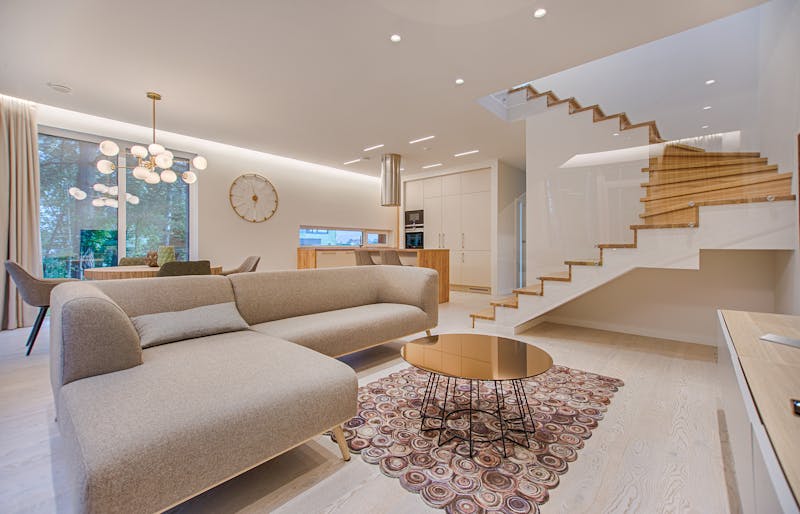
LED downlights are the most popular lighting upgrade in Australian homes, and for good reason — they deliver better light, use 80% less energy than halogens, and last 10–15 years without replacement. But choosing the right downlights and getting the layout right makes the difference between a room that looks fantastic and one that feels like a hospital corridor.
Types of LED Downlights
IC-4 Rated (Insulation Contact)
IC-4 rated downlights can be directly covered with ceiling insulation — essential for energy efficiency and required by the Building Code of Australia. Non-IC rated downlights need clearance from insulation, creating thermal gaps in your ceiling. Always choose IC-4 rated for residential installation.
Fixed vs Gimbal
- Fixed: Light shines straight down. Best for general room illumination where even coverage is the goal
- Gimbal (adjustable): Light can be angled up to 30°. Use for highlighting artwork, architectural features, or task areas. More expensive but more versatile
Integrated vs Retrofit
- Integrated: The LED is built into the fitting — you replace the entire unit when it eventually fails (in 15+ years). Better heat management, slimmer profile, generally brighter
- Retrofit: An LED globe that fits into an existing downlight housing. Cheaper for halogen-to-LED conversions where you keep the existing fitting
Choosing the Right Colour Temperature
Colour temperature is measured in Kelvin (K) and dramatically affects the feel of a room:
- Warm White (2700K): Soft, yellowish tone. Creates a cosy, relaxed atmosphere. Best for bedrooms, living rooms, and dining areas
- Warm White (3000K): Slightly cleaner than 2700K but still warm. The most popular choice for Australian homes — works in almost any room
- Cool White (4000K): Clean, crisp white light. Excellent for kitchens, bathrooms, laundries, and home offices where task visibility matters
- Daylight (5000K+): Blueish-white, very bright feel. Best for garages, workshops, and commercial spaces. Too harsh for most residential rooms
Our recommendation: 3000K throughout most of the home, with 4000K in the kitchen and bathrooms. For maximum flexibility, consider tuneable white downlights that let you adjust colour temperature with a dimmer or app.
How Many Downlights Do You Need?
The right number depends on room size, ceiling height, and the wattage/beam angle of the downlight. A general guide:
- Spacing: Downlights should be spaced 1.2–1.5m apart for even coverage
- Edge offset: Place the first row 600–900mm from walls to avoid dark edges
- Coverage: One 10W downlight covers roughly 1.5–2m² of floor space
Quick Room Guide (2.7m ceiling, 10W downlights)
- Small bedroom (3x3m): 4 downlights
- Standard bedroom (4x4m): 6 downlights
- Living room (5x4m): 8–10 downlights
- Kitchen (4x3m): 6 downlights + under-cabinet strips
- Bathroom (3x2m): 4 downlights
- Open plan living (7x5m): 12–16 downlights in zones
Dimming LED Downlights
Dimmable downlights are strongly recommended — they let you adjust brightness for different activities and times of day. But there's a catch: you need the right dimmer.
Old halogen dimmers (leading edge) will cause LED flickering, buzzing, or limited dimming range. You need a trailing edge dimmer specifically designed for LED loads. When we install dimmable downlights, we always replace the dimmer to match.
LED Downlight Installation Costs (Sydney 2026)
- Supply + install (per downlight): $75–$120
- Halogen to LED retrofit (per light): $40–$70
- Dimmer switch upgrade: $120–$200
- New circuit for downlights: $300–$500
Planning a downlight installation? Call Randwick Electrical on 0413 707 758 — we'll design a layout that looks great and provide a fixed quote before we start.